
Call us now :08045803641
 Send Inquiry
 Send Inquiry
Laboratory Hot Plate
Price 2000 INR/ Piece
MOQ : 1 , , Piece
Laboratory Hot Plate Specification
- Control Type
- Rotary Knob Thermostat
- Heating Capacity
- Rapid and Uniform Heating
- Shape
- Rectangular
- Display Type
- Analog Temperature Indicator
- Accuracy
- ±5°C
- Power Supply
- AC, 50Hz
- Features
- Overheat Protection, Non-slip Feet, Corrosion Resistant Body
- Temperature Resistance
- Upto 350°C
- Type
- Laboratory Hot Plate
- Dimension (L*W*H)
- 250 x 200 x 150 mm
- Equipment Type
- Hot Plate
- Equipment Materials
- Mild Steel Powder Coated Body
- Power
- 1000 W
- Voltage
- 220 V
- Material
- Ceramic Top Plate
- Application
- Heating Solutions in Laboratory
- Capacity (Ltr)
- 2 to 5 Litres
- Heating Element Material
- Nichrome Wire
- Thermal Cut-Off
- Inbuilt
- Insulation
- Glass Wool Layer
- Safety Standard
- CE Certified
- Surface Finish
- Enamel Coated
- Weight
- Approx. 4.5 kg
- Top Plate Size
- 200 x 150 mm
Laboratory Hot Plate Trade Information
- Minimum Order Quantity
- 1 , , Piece
- FOB Port
- AMBALA
- Supply Ability
- 2000 Pieces Per Month
- Delivery Time
- 1 Week
- Sample Policy
- Sample costs shipping and taxes has to be paid by the buyer
- Main Export Market(s)
- Western Europe, Australia, North America, South America, Eastern Europe, Middle East, Central America, Africa, Asia
- Main Domestic Market
- All India
Laboratory Hot Plate About
Electric Hot Plates are most important tools in laboratory, cytology, histology, pathology which are utilized to heat samples. In order to suit each application, these laboratory hot plates are designed in variety of sizes, temperature ranges and heating top materials. Hot plates withsquare, rectangular and round heating topare usually available in the market today.Advanced Safety and Durability
The laboratory hot plate incorporates essential safety features such as an inbuilt thermal cut-off, overheat protection, and CE certification. Its powder-coated mild steel body and enamel-coated ceramic surface make it highly resistant to corrosion and thermal stress, ensuring longevity and safe usage in demanding laboratory settings.
Superior Heating Performance
Equipped with a nichrome wire heating element and insulated with a glass wool layer, the hot plate guarantees rapid and uniform heat distribution up to 350C. The rotary knob thermostat allows for fine temperature adjustments, while the analog temperature indicator offers easy monitoring during processes.
Optimized for Laboratory Use
With a rectangular 200 x 150 mm ceramic plate, this equipment is tailored for laboratory heating tasks involving containers with capacities from 2 to 5 litres. Its compact design, stable non-slip feet, and easy-to-clean surface make it highly practical for research, quality control, and educational laboratories.
FAQs of Laboratory Hot Plate:
Q: How should the laboratory hot plate be properly used to ensure safe heating?
A: Position the hot plate on a stable, level surface and use containers compatible with its 200 x 150 mm ceramic surface. Always connect to a 220V AC, 50Hz supply. Adjust the desired temperature using the rotary knob and monitor via the analog display. Avoid exceeding its 25 litre capacity and never leave it unattended while in operation.Q: What are the benefits of a ceramic enamel-coated top plate?
A: The ceramic top plate with an enamel coating provides excellent thermal resistance, rapid and uniform heating, and increased durability. It is also highly resistant to chemical spills and corrosion, which simplifies cleaning and enhances longevity.Q: When should I use the inbuilt thermal cut-off feature?
A: The inbuilt thermal cut-off automatically activates when the temperature exceeds safe limits, preventing overheating and potential damage. This feature is always operational, providing constant protection during all heating applications.Q: Where can this laboratory hot plate be optimally used?
A: This hot plate is ideally suited for laboratories engaged in research, analysis, or educational purposes. It is suitable for heating chemical solutions, samples, and reagents in scientific, industrial, and academic institutions across India and globally.Q: What is the process for setting the desired temperature on this hot plate?
A: Turn the rotary knob thermostat to select the desired temperature, up to a maximum of 350C. The analog temperature indicator will display the current surface temperature, allowing the user to monitor and maintain accurate heating within 5C.Q: How does glass wool insulation improve the hot plates efficiency?
A: The glass wool layer insulates the heating element, enhancing energy efficiency by minimizing heat loss and ensuring uniform heat distribution across the top plate. This insulation also helps maintain consistent heating performance.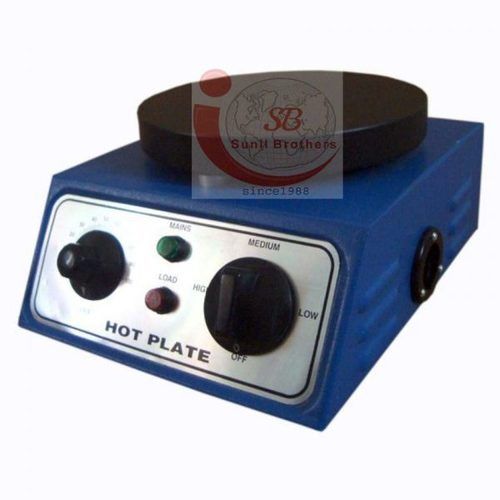
Tell us about your requirement

Price:
Quantity
Select Unit
- 50
- 100
- 200
- 250
- 500
- 1000+
Additional detail
Mobile number
Email

More Products in General Laboratory Equipment Category
Digital Magnetic Stirrers Hot Plate
Price 3500 INR / Piece
Minimum Order Quantity : 1 Piece
Type : Other, Hot Plate with Magnetic Stirrer
Material : Body: Mild Steel; Top Plate: Stainless Steel
Power Supply : Single Phase 220V AC
Temperature Resistance : Up to 300C
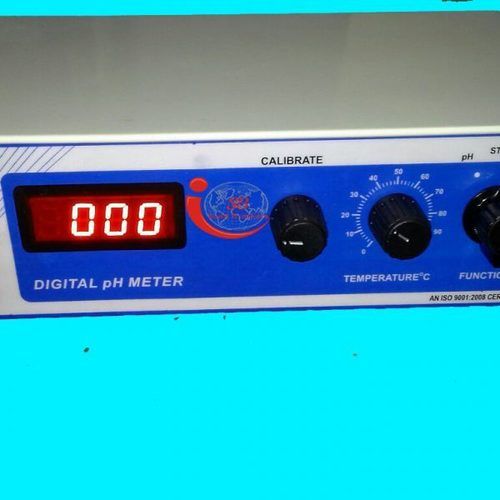
Digital pH Meters
Price 3000 INR / Piece
Minimum Order Quantity : 1 , , Piece
Type : Digital, Other
Material : Metal body with plastic knobs
Power Supply : 220V AC
Temperature Resistance : Can measure temperaturerelated pH changes
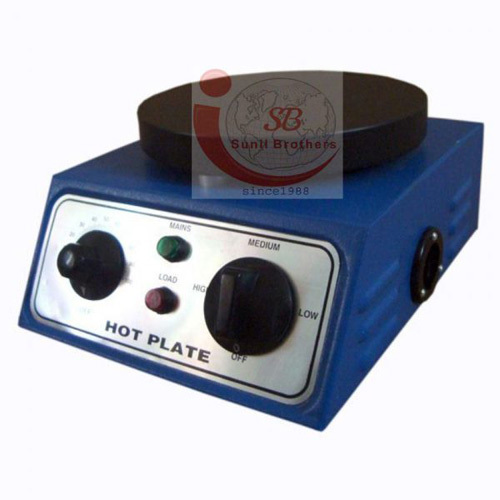
Laboratory High Temperature Resistance Hot Plate
Price 2000.0 INR / Unit
Minimum Order Quantity : 10 Units
Type : Other, Laboratory equipment
Material : Metal and plastic
Power Supply : Electric (AC)
Temperature Resistance : High temperature resistance

 Send Inquiry
Our Products
- Clean Room Equipment
- Biology Equipment
- Chemistry Lab Equipment
- Automatic Tissue Processor
- Laboratory Travelling Microscope
- Lab Microscope
- Blood Bank Equipment
- Centrifuge Machine
- General Laboratory Equipment
- Hospital Furniture
- Histopathology Lab equipment
- Pharmaceutical Lab Equipment
- Oven and Incubator
- Stainless Steel Kick Bucket
- Laboratory Equipment
- Mortuary Chamber
- Laboratory Autoclave
- Hospital Bed
- Bed Side Locker
- Spectrophotometer
- Scrub Sink

Plot No.- #4, Shanti Nagar, Kardhan, Ambala Cantt - 133001, Haryana, India

Mr Sunil Dhiman
(Proprietor)
Mobile :08045803641
 Send Inquiry
 Send SMS
Developed and Managed by Infocom Network Private Limited.
